Showing posts with label Trick Android. Show all posts

Tuesday, January 12, 2016

hidden android secret codes that you

We all know that Android is one of the leading Mobile Operating system. Almost Every House atleast have 1 Android mobile. We all love to Tweak and play tricks with Android Smartphones. Each day we tend to learn More and more about Android Smartphones.

The Popularity of Android is just not because it is Owned by Google but also there are Tons of apps available in Google Play Store for almost every task you can think of.

You might be Well Versed with Android Operating system but you might not know Some Hidden Android Secret Codes that you used to Explore more about android.

Today I will share some Cool Hidden Android Secret Codes that will help you to know more about your Android smartphone and will ease up your Different tasks


Hidden Android Secret Codes


*#*#778O#*#* = Factory Data Reset

*#*#I472365#*#* = Quick GPS Test

*#*#0673#*#* OR *#*#0289#*#*  = Audio Test

*#*#2664#*#* = Touch Screen Test

#’#273283*255*663282*#*#* = Backup Media Files

*#*#0283#*#* = Packet Loopback Test


*2767*3855# = Reinstalls The Phones Firmware & Format Your Phone

*#*#232339#*#* OR *#*#526#*#* = WireIess Lan Test

*#*# 1575#*#* = Different GPS Test

*#*#4636#*#*‘ = Complete Information About your Phone

*#*#2663#*#* = Touch Screen Version

*#*#232337#*# = Displays bluetooth Device Address

*#*#4986*2650468#*#* = PDA, Phone. Hardware, RF Call Date

*#*#44336#*#* = Displays Build Time

*#06# = Displays IMEI Number

*#*#8255#*#* = Google Talk Service Monitoring

*#*#I I I I#*#*   |  *‘#*#2222#*#* = FTA Software Version FTA | Hardware \/ersion

*#*#3264#*#* = Rom version

*#*#23233I#‘*#* = bluetooth Test

*#*# 1234#’#’ = PDA and Phone Firmware Info

*#*#0*#*#*= LCD Display Test

*#*#0842#*#* Vibration and Backlight Test

*#*#0588#*#* = Proximity Sensor Test

*#*#232338#*#* = Wi-Fi Mac Address

*#*#7262626#*#*= Field Test

*#*#34971539#*#* = Camera Update

*#*#19732840#*#* = Enable Test Mode

So the Above List Consists of almost 27 Android secret Codes that you might have not known but Since i have shared them here now you are aware of them. So use them whenever you Wish to Check and explore more about your Phone.


Source from http://www.smarttricks.net
·   0

Why clearing recent apps is a waste of time and task killers don't work

The second of these two statements is pretty much accepted as common knowledge by anyone even passingly familiar with how app caches and RAM work in Android, but the first statement is not as commonly understood. This is why the developer of Greenify, a great app you can use to hibernate apps that have a tendency to stay up past their bedtime, decided to clear things up.


It may be tempting to ''close all'' but you won't really get the performance boost you want. © ANDROIDPIT
To give you the super simple explanation (which we've covered in greater depth before), when you launch an app it gets stored in random access memory. When you close it, it stays in your RAM so that if you launch it again it will launch must faster. When you force close or swipe away an app in the recent apps list, you effectively clear out that cached app and the next time you launch it, it will be like you're doing it from a fresh boot. This means it takes longer and requires more system resources.

  • Best apps for monitoring system performance on Android.

AndroidPIT performance monitoring 1
Depending on how into your RAM and CPU usage you are, there's lots of tools available. © AndroidPIT/Pavel Petrov
Now, when you have a recent apps list that's 20 apps long then it makes perfect sense to clear away the ''one-off'' apps that you opened once and probably won't open again in the near future. This clears up RAM for other tasks and, on a practical level, you probably don't need those apps stored in memory anyway. In this instance, swiping away unused apps can be a useful way to free up some additional RAM for other tasks. But clearing all of your recent apps creates slow down later on.

  • 3 apps to boost Android system performance.

Some RAM managers only clear out the least used apps in your recent apps list. © ANDROIDPIT
The same thing goes for task killers and RAM boosters, which simply kill everything: cached apps and background processes. The same problem arises when you launch the app again. If you've cleared it from memory it takes longer to launch, and if you've killed background processes they usually just start up again after a short period of time. So for freeing up RAM in the short term these are perfectly fine, but as a general remedy for improving performance they are nothing more than a panacea.

  • How to stop Android apps from running in the background.

AndroidPIT Process Stats RAM Usage
The Android OS gives you all kinds of data that lets you assess how demadning your apps are. © AndroidPIT
If you know how these tools work then using them is fine, but most people don't quite get the mechanics of how caches work and why they are actually a good thing. Take Android L's ART (Android Run Time), for example: by pre-compiling apps once and keeping them stored in RAM, you'll notice significant increases in app launches and responsiveness. This is a good thing, and there are several reasons why Google is making ART the default runtime in the next version of Android.

  • 3 things you didn't know about ART.

This is also why the dev behind Greenify, Oasis Feng, decided to illuminate us with the following pearls of wisdom:
Swiping away apps from recent tasks frequently is not a good practice, since it reduces the efficiency of process cache mechanism in Android, thus impact the performance of your device.

Swiping away apps from recent tasks kills the process of those apps, thus prevent them from being cached in memory. When you launch them later, it takes longer time and much more CPU cycles to create the process and re-initialize the app runtime.

Clearing recent tasks does free much memory, at the expense of later performance and battery consumption for launching those apps again. So if you have a device with 2G RAM, it gains no benefits in practice.

Greenify INSTALL

Coming from a developer involved with an app that is very well recognized for managing your apps, background processes and processor consumption, you can assume he knows what he's talking about. So, the moral of the story is this: clearing everything from the recent apps list is a waste of time unless you seriously need every inch of RAM available right there and then. Clearing out apps you're not going to switch between regularly however, is perfectly fine. So, your frequently used apps can stay and everything else can be killed with fire. Simple.

Source fromhttp://www.androidpit.com
·   0

Best Android smartphone for photographers our top five

Almost every smartphone owner takes an occasional picture with their handset, but these portable devices are increasingly being used as the primary tool for taking snaps. A high quality camera may not be a necessity for everybody when deciding on a new smartphone, but if you happen to be interested, we've got you covered with our list of best Android smartphones for the mobile photographer! ​

The Sony Xperia Z2 (pictured) features one of the best camera sensor currently available on Android. / © ANDROIDPIT

HTC One (M8): bright and unique


HTC took a lot of criticism for the use of its "ultra pixel technology" in its HTC One series. "Only a marketing ploy," "subpar picture quality with little detail," "poor implementation of a good idea" etc. Perfect, HTC's camera is not, but the HTC one (M8) makes some important arguments. The dual-camera setup, combined with the ultra pixel technology, does result in fewer details when pictures are magnified. However, it produces noticeably stronger light, making pictures taken in low-light conditions look far superior (and less noisy) than most of the competition.

  • HTC One M8 camera test: this is how good the camera really is

teaser one m8 camera video
Despite only housing a 4 MP sensor, the HTC one (M8) performs brilliantly in certain conditions. / © AndroidPIT 
The HTC One (M8) lets you manually change values ​​such as shutter speed, white balance, sharpness level and the ISO value in the camera menu, as well as offering a simple way to store presets. All of the setting combinations that you make can be conveniently saved and then switched as you view photos - allowing you to tinker with your own photo filters.

Sony Xperia Z2: high resolution and good software


There is a solid reason to favor the Sony Xperia Z2 over others on our list: it has the highest resolution camera at 20.7 megapixels. It's a figure bettered by none of the other established manufacturers in the Android sector, and means the Xperia Z2 is capable of some seriously impressive shots. Sony is already an expert in the field of digital photography, and the Z2 comes with numerous, sophisticated software features like the continuous shooting mode "Timeshift Burst" or the infinitely adjustable focal length (which changes the focus of the foreground and background objects). Instead of attempting a "less is more" approach to pixel density like HTC, Sony has gone all out with a high-definition camera which is more than capable of getting great shots.

  • Post-focus/lens blur: Galaxy S5 vs Xperia Z2 vs One (M8) vs Google Cam

The background blur can be adjusted on the Xperia Z2. / © ANDROIDPIT

Samsung Galaxy S5: Best all-rounder


The Galaxy S5 is, in short, the best overall package for photos with an Android smartphone. Although Samsung's software capabilities sometimes means the photos look better after some processing, making up for some of the visual artifacts in the initial picture, the average photographer will probably look at the S5 as the best camera. It's fast, with an accurate focus, and maximum resolution of 16 megapixels in the 16: 9 format. The HDR mode comes with real-time preview and blur effect, with which one can achieve the look of a professional SLR smartphone photos.

  • Samsung Galaxy S5 camera: the best features for quality pictures [Video]

samsung galaxy s5 camera teaser article
The camera interface of the Galaxy S5. / © ANDROIDPIT

Oppo Find 7: Not just for specialists


To see the real benefit of the Oppo Find 7 you have to expand your horizons. The camera produces decent pictures and satisfactory recordings, but it also brings with it a special feature: the Oppo Find 7 can take pictures in RAW format. RAW files are, as the name suggested, uncompressed data files, which means they are primed editing on a PC with professional programs after they have been taken. The advantage of this is that, while a JPEG is already compressed and processed by the camera software, a RAW file is open for the photographer to get the best from the image. White balance, exposure, saturation, contrast and brightness levels can be adjusted much more effectively by an expert.

  • Oppo Find 7 vs the competition: Galaxy S5, Xperia Z2, HTC One (M8), LG G3

The camera of Oppos Find 7 offers some interesting options not just limited to experts. / © ANDROIDPIT
In addition, the Find 7 photos can be taken with a super-resolution of around 50 megapixels! With only a 13 MP camera, this is a software trick of course, but the results, for those looking for incredibly fine detail, are fantastic. If you are somebody who likes large format prints and want to hang your photos on the wall, the Find 7 may be your best bet.

Samsung Galaxy K Zoom: the smart camera


The Galaxy K Zoom is the successor to the Galaxy S4 Zoom, another attempt by Samsung at creating a smartphone/camera hybrid, rather than a smartphone with a camera. It is the only Android handset to feature an optical zoom, capable of zooming-in on details without sacificing quality like with a digital zoom. Also, the K zoom brings a 20.7 megapixels sensor, and Xenon flash instead of the usual, and significantly duller LED light. It's definitely one to check out for camera enthusiasts.

Samsung Galaxy K Zoom
© Samsung
There you go, those are our top picks. If you want some further reading, check out our best Android camera app article to discover some other cool ways to improve your snaps. What is your favorite smartphone for taking pictures?

Source fromhttp://www.androidpit.com
·   0

Best Chromecast apps for Android

With the release of Chromecast in a many countries, it’s a good idea to get familiar with the Android apps that you can use with this mighty dongle. While the Play Store has a bunch available, they’re not always listed in the most useful or intuitive way. Here’s a few of our favorites Chromecast apps for Android.


Cast content to your TV and enjoy it on the big screen. © Iaroslav Neliubov/Shutterstock/AndroidPIT


Hulu Plus


Hulu, like Netflix, is a great TV and movie watching service where you can watch unlimited amounts of either on your Android smartphone or tablet for 7.99 USD per month. It’s received high acclaim for offering a great selection and the latest episodes for your favorite shows. A great thing about Hulu Plus is that it allows you to cast whatever you are watching to your TV using Chromecast, as well as Xbox One, PS3 and PS4.

AndroidPIT Hulu Plus
Watch an unlimited amount of movies and TV shows with Hulu Plus. / © Hulu


Google Play Movies and TV


Google Play Movies & TV is a great way to buy and even rent movies and TV shows on your Android device. TV shows are only available in the USA, UK, Japan, Canada and Australia for the time being. The app also supports Chromecast so you can watch whatever you’ve purchased in the comfort of your living room on your TV.


Buy and rent videos to cast onto your TV with your Chromecast dongle. / © Google


Pandora


Streaming music is a great way to discover new artists, songs and even new genres. The online radio service lets you personalize up to 100 different radio stations, as well as discover those made up by others, and genre stations created by the developers of Pandora. In addition to music, you can listen to comedy programs. Make sure you are using Wi-Fi when using Pandora, as opposed to Wi-Fi, however if you are at home, you are likely to be using the first option anyway. With Chromecast support, you can have play, control and customize your radio stations right on your TV.

androidpit pandora
Control and enjoy Pandora on your living room TV.  / © Pandora


Plex


Plex is a personal multimedia app that lets you to stream your videos, music, photos and home movies to your Android phone from your computer which is running Plex Media Server. You can organize, easily browse through and then enjoy it on any connected device, enriches your media. It allows for media syncing from your phone, as well as from Google Drive, Dropbox and other cloud storage services, so that you can view this on your phone even when offline. And now it goes a step further with Chromecast support: you can enjoy the services Plex has to offer on your HDTV. The media server itself is free, but the mobile app will run you $4.99 on the Play Store.


Sync, organize and view your media with Plex.  / © Plex, Inc.


VEVO


VEVO is your music video service so you can watch the latest and best that artists are making. You’ll be the first to know when a new video is out, discover new and upcoming genres and artists, create your own playlists and share these with your friends. Of course, with Chormecast support you can get an even bigger and badder experience on your TV.

vevo android app
VEVO lets you check out the latest music videos and then cast them to your TV. / © VEVO


BBC iPlayer


For our UK audiences, the BBC iPlayer app is one of the best you can use if you have bought yourself a Chromecast dongle. The app lets you watch live TV, and download the latest programs. The app could use fixer-upper we must admit with quite a few users complaining, but for the most part, this is a great app that you can now cast right on your TV.


/ © Media Applications Technologies for the BBC


AllCast


One of the most popular apps currently available for Chromecast is AllCast. It can easily cast content from your mobile device straight to your device, including music, videos, and photos. AllCast supports numerous formats, including Roku, Apple TV, and the Xbox 360/ One. There is a free version that you can use to try out AllCast, however it has limits on the video length you can play. The premium version is available for $4.99.

AndroidPIT AllCast
 Get content from your mobile device can cast it, this includes music, videos, and photos. / © ClockworkMod


MyCastScreen


Chromecast comes with a default home screen, the one that rotates through stock photos and displays the time in the corner. If you’re looking for something with a little bit more functionality, check out MyCastScreen. The app itself costs $0.99, but it lets your cast cards with the time and date, local weather and traffic information, as well as news headlines. While it is still pretty new, the developer is promising more options and customization on the way.


The time and date, local weather, traffic information and news with MyCastScreen. / © musicalbigfoot


DayFrame


Want to be able to turn your television into a giant slideshow while entertaining? With DayFrame, you can cycle through your favorite social media photos and have them displayed on your television. The app connects to a bunch of different social media services, including Facebook, Instagram, Twitter, Google+, among others. Not only can you search your own photos, but you can also have it choose a bunch of random topics of your choosing.  The app itself is free, but shows a small logo at the top of the screen. In order to get rid of it, you’ll need to upgrade to the Prime version for $0.99.

dayframe
Rotate through your favorite social media photos and have them displayed on your TV. / © cloud.tv


GamingCast


For $1.99, you can bring some classic games to your television while using Chromecast and your mobile device. Choose from Snake, Pong, Xonix, or Tetris and try it out for yourself on your giant screen. While the selection is rather limited now, the developer has promised to bring more classic titles to the app in the near future.


Play Snake at a whole new level. / © Eli Sherer


Cast Store


If you’re looking for other types of apps available for Chromecast, make sure to check out the Cast Store. It brings a bunch of apps together in easy to find categories, so that you don’t have to search high and low in the Google Play Store.

cast store for chromcast
Find out about all the different apps to use with Chromecast. / © GoKo


What apps do you enjoy using with your Chromecast dongle?

Source fromhttp://www.androidpit.com
·   0

Tuesday, October 6, 2015

5 features we’d love to see on Android phones in 2015

flagship smartphones aa (8 of 18)
Smartphone technology moves fast, but manufacturers can also be pretty cautious at times. The easiest and surest route to profit is often to match the competition and build on what’s there, rather than go back to the drawing board. While there’s an ever-expanding roadmap of possibilities opening up before us, many prove to be dead ends, and it takes major success with a road less traveled before the pack takes note.

I wrote this exact feature two years ago, 5 features we’d love to see on Android phones in 2013, and while there’s been some progress, three of those entries are going to make this list as well. Better Wi-Fi and more antennas don’t seem pressing anymore, but flexible displays, better batteries, and tougher phones are still totally relevant.

Flexible displays


We’ve seen a toe dipped in the water with regard to flexible displays as Samsung and LG have experimented with curves in the shape of the Samsung Galaxy Round and the LG G Flex. But a very slight curve in the rigid display is not what we have been waiting for.
samsung galaxy note edge review aa (23 of 26)

The Samsung Galaxy Note Edge is a real step in the right direction. Here’s something that’s genuinely innovative. It has a strip on the edge that can come to life independently of the main display and offer extra controls. It’s also potentially readable on the nightstand when you’re lying in bed. It would have been more impressive if Samsung had the bravery to launch it as the flagship Note, the next step in the series and really throw some marketing weight behind it. The strip is a good idea, but you also get the feeling it needs imaginative software developers to make the most of it and Samsung might not be the best company to deliver. Honestly, it’s still not what we’ve been waiting for.

What we’ve really been waiting for is a device with a genuinely flexible display that folds from smartphone size for your pocket up to tablet size when you want a larger screen. Flexibility introduces serious technical challenges relating to touchscreen functionality, not to mention the rest of the components that make up the average smartphone. Although I could see the value in a device with a normal smartphone touchscreen and an extendable display without touch functionality for reading and watching movies on.

It’s going to take a seriously clever design to pull this off. I don’t expect it next year, or even the year after that, but we should see some new designs in the short term that challenge the slab form factor and use flexible displays in innovative ways.

Better batteries


The average size of batteries is going up, but OEMs keep building bigger, higher resolution screens. A lot of the new hardware inside smartphones is about doing more with less power, but are we really feeling the benefit? I think battery life has improved a lot, but it depends on what device you use. My Xperia Z2 definitely outlasts any previous Android phone I have owned (HTC Desire, Samsung Galaxy S3, Nexus 5), but I’m greedy and I still want it to last longer.
aa-htc-butterfly-2-battery

We’ve looked at why wireless charging hasn’t taken off properly in the past. There is technology in the works to charge your device while it sits in your pocket, but is this kind of charging really the answer to our battery woes? Charging speeds have been increasing and there’s obvious value in being able to fully charge a phone in an hour or less, but it still won’t solve the problem of running out of juice.

Battery saving software has been improving as well, but maybe the designers need to do more to consider power usage. What kind of trade-off would you accept? If you got 25% longer battery life if your phone had a 1080p display, over a 4K display would you take that deal? Battery life is improving, but OEMs could be taking more advantage. The E-Ink display on the YotaPhone 2 is a great example of some smart design that could really boost battery life.

Tougher phones


This has been tackled to an extent, as Sony pushed waterproofing into the Android mainstream. I’ve dropped my phone in the bath twice without any ill effects; though in the past I probably wouldn’t have risked using my phone in the bath. Water resistance should be standard in a smartphone now.
LG G Flex Drop Test Outdoors AA (18 of 25)

The trouble is that general toughness has not improved. My Xperia Z2 survived a fall from standing height onto a tile floor unscathed, but then fell off my lap while sitting onto a wooden floor and cracked. There’s a definite element of luck to smartphone falls, but a thin slab of glass and metal or plastic is inevitably going to be prone to breaking on impact with a hard surface.

I resent having to slap a case on my beautifully designed smartphone. I want it naked. There are some great case manufacturers out there, but they’re still a reluctant necessity rather than something to get excited about. The trouble from an OEM point of view is that greater durability without adding bulk is tough and everyone wants slim devices. There’s limited benefit to them because they make money if you break your phone and have to repair it or buy a new one. The strength of durability as a selling point for consumers isn’t all that clear.

No more passwords, wallets, or keys


nexus 6 first impressions (3 of 21)


Imagine that your smartphone knows when you are holding it without you having to enter a password, PIN, or pattern. Biometric finger or eye scanning, or voice recognition are all potentially much more convenient. It could even learn the way you move, measure distances, recognize your gait. A combination of factors could make this really secure. It should unlock automatically when you hold it and lock up when someone else does, unless told otherwise.

If your smartphone can reliably identify and authenticate you then it would be safe to use it as your universal key. I want my smartphone to start my car and unlock my front door. I want to use my smartphone to pay for goods and services. I don’t want to have to carry anything else. The technology is here, it just needs to be polished and proven trustworthy.

People often argue the dangers of a system like this, but fail to recognize that the current system is less secure. If I steal your wallet, I can spend your cash. I can probably get away with using your plastic in certain scenarios without needing the PIN. I can certainly use your keys to enter your house or drive your car. I can’t do any of that with your smartphone if it has a secure authentication system that won’t let me in.

Thinking ahead


I’m possibly overexcited by the potential pre-emptive powers of Google Now, but the reality is often disappointing. Pushing up a train timetable as I arrive at the station, warning me about traffic, or providing a sports score update is all well and good, but I’d like to see it go further.
google now nexus 5 2

As Google Now spans more devices and potentially has access to more data about me, I’d like it to do more for me. For a start it should be able to sync across devices and update accordingly when I dismiss something, I don’t want to see the same card I swiped away on my phone still there on my tablet or desktop (that applies to all Android notifications).

It should be the hard-working personal assistant that most of us can’t afford. Remind me to send a message to this person without me having to set a reminder, tell me that my favorite band is playing close by next month, or make sure I don’t forget to pay a bill. How about telling me I could save money by switching to this service, or alerting me to a big discount deal on something it knows I want?

I want an Android phone that’s thinking ahead for me.

That’s it for now. Agree or disagree? Want something else I didn’t mention? Hit the comments and tell us. I’ll see you in two years when hopefully I’ll have to draw up a completely new list because these features have been delivered.


Source from:

http://www.androidauthority.com
·   0

Upcoming Android Phones for Last Season of 2015


Nokia upcoming android phone 2015 eagles | Play on a mobile phone fun


Looking for the best android phone for the last season of 2015? Android is very popular and almost all mobile phones by any names of the brands or companies uses Android as the OS of the phone. And for you as an Android hunter, it is important to get up-to-date with the upcoming android phones to always update the information of new Android that will be introduced in the market. And you will also find a list about the new android that will come.

In the list of upcoming android phones 2015, almost all brands or companies will introduce the new update of their Android phone either with the new type or the next generation of the previous time. And sure, it is not only about the type or brands of the upcoming android phones that you need to know but also the specs and feature of each type of the Android phones. Sure, the change may not be so different with the previous android phones.

Commonly, the upcoming android phones will offer more features and some also update and upgrade the system and technology to make the phone more than just a mobile phone or for entertainment but also for working. So, it depends on what you want to look for the phone as each type of phone may have the good point at certain feature and for another may not. It is just like other brands of Android phones that may be excellent in one feature but not for another one.

That is why, if you go online, you may find a list of upcoming android phones with certain number of the new Android phones that will come in the market with their own pros and cons. Therefore, it is a good idea to read the review of each type of the phones. And there are also some reviews from professional editor or reviewer you can read to find the best one from these upcoming new android phones.

Description: upcoming android phones give you more options with new Android phones and with new features and technology and system. Reading the review of the phones is a good idea.

Source from:

http://appsfree.us
·   0

Tuesday, September 22, 2015

Huawei Announces Latest 7-inch Android Smartphone, The MediaPad X2


huawei-x2-amber


March 1, 2015 - Written By Jeremiah Nelson


Huawei unveiled some awesome new smartwatches this morning, as well as some new fitness trackers. That’s not all we got from them this morning, though as the company also announced a new 7-inch “smartphone” called the MediaPad X2. It’s basically a tablet with a phone radio in it, so it does make phone calls. Technically you could call it a smartphone and Huawei does. From the front it looks quite a bit like an HTC device.

The MediaPad X2 is an updated version of the MediaPad X1. It has a 2.0 GHz Kirin 930 chipset inside and it supports Cat. 6 LTE for ultra-fast data speeds. It also has a 1900 x 1200 display resolution, 5,000 mAh battery, a 13-megapixel camera on the back, and a 5-megpixel camera on the front. The device will ship with Android 5.0 Lollipop and it is running Huawei’s custom UI on top of it. “Featuring a fully laminated 7-inch ultra HD IPS screen and a slim body of only 7.28 mm, the MediaPad X2 houses an ultra octa-core chipset, making it the first 64-bit ultra octa-core, 4G-enabled LTE dual-sim phablet,” Huawei says in their press release.

The device will come in two different versions. There’s a 3GB variant that has 32GB of internal storage, and a 2GB version with 16GB of storage. The 2GB version comes in silver, while the 3GB version will come in rose gold. Both devices will have dual-SIM slots. No word on pricing or availability on these “phones” yet, but Huawei should be announcing that at some point soon.

We’re live in Barcelona, Spain, for MWC 2015, bringing you all of the news and new devices that are coming out. We’ll be at HTC’s event, which kicks off at 10am Eastern Time, and then we’ll be on hand at Samsung’s Unpacked Event at 12:30pm ET time as well. The fun is just getting started as MWC 2015 is just getting started. The event runs through Thursday, March 5 and will be jam-packed with new phones, smartwatches, and a whole lot more.


Source from: http://www.androidheadlines.com
·   0

Meet Alcatel’s new Android phones, the biggest underdogs of MWC 2015


Meet Alcatel’s new Android phones, the biggest underdogs of MWC 2015

alcatel-one-touch-idol-3-mwc-2015-52


Apple’s 4.7-inch and 5.5-inch iPhone 6 models are the smartphones to beat this year, and some companies have already come out with worthy rivals, including the HTC One M9 and the Galaxy S6 that both debuted at this year’s Mobile World Congress. But these top devices were not the only Android handsets unveiled at the show, with one company coming out with a set of brand new smartphones that, coincidentally or not, have exactly the same screen sizes as Apple’s 2014 iPhones.


FROM EARLIER: Hands-on with the best Android smartwatch that has ever been made


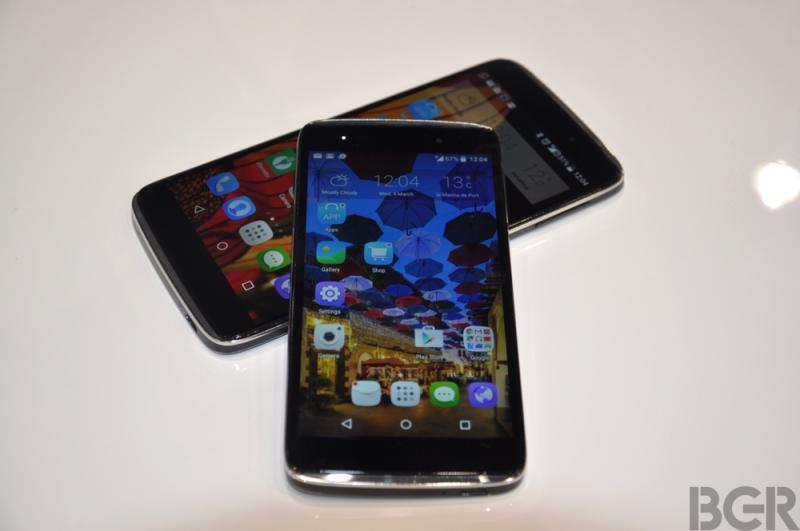
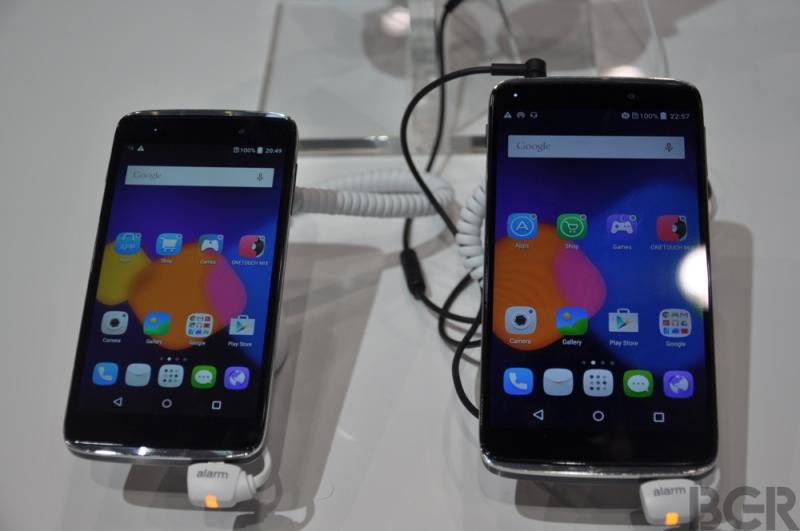
Alcatel on Monday unveiled the OneTouch Idol 3 line that contains precisely two models: A 4.7-inch version and a 5.5-inch version. But even though Alcatel says these smartphones feature top-line technologies, they’re not necessarily flagship handsets by this year’s standards.


Of course, the two smartphones do have some special features that are supposed to differentiate them from competitors, but don’t think of unibody two-tone aluminum designs or curved displays. Instead, Alcatel is offering users JBL audio integration and two-front facing speakers for significantly improved audio.


The phones also have a feature you don’t see on any other devices: 100% reversability, which means their software can adapt automatically to the screen orientation, no matter how a OneTouch Idol 3 is held.


However, this 100% reversability feature only concerns the user interface — the physical buttons on the handset, or the cameras’ placements, can’t change positions just because you want to hold the device in a different way. The feature is really useful for not having to bother with picking the device in the right way to make sure everything on the screen is facing up.


The most interesting thing about them is that they will both launch with Android 5.0 Lollipop on board, which should be good news for anyone looking for some affordable Android devices capable of delivering great performance.


Specs-wise, the 4.7-inch model has a 720p display, 1.2GHz Snapdragon 400 processor, 1GB of RAM and 8GB of storage (16GB available for dual-SIM model), microSD support, 13-megapixel main camera, 5-megapixel front-facing camera, and 2,000 mAh battery.


The 5.5-inch OneTouch Idol 3 has a bigger display with Full HD resolution, 64-bit octa-core Snapdragon 615 processor, 2GB of RAM, 16GB/32GB of memory (depending of number of SIMs) and 2,910 mAh battery.


The phones should be launched at some point in April, with prices ranging from around $200 for the 4.7-inch handset, and at around $250 for the 5.5-inch phablet.


alcatel-one-touch-idol-3-mwc-2015-1


Source from: https://www.yahoo.com

·   0

Monday, August 24, 2015

22 tips, tricks and shortcuts for Android Lollipop


The innermost secrets of Android’s new operating system: psychadelic colour schemes, enhanced privacy and how to unlock your phone with your face.
Android meadow


1. Settings Search Bar
android tip Settings search


Settings now has its own dedicated search bar. While this may seem like a very minor addition, it’s actually a great timesaver when you know exactly what you’re after. For example, let’s say you want to change your network settings, but you don’t know where to look. Just head to settings and search for “network” and you’ll find what you need almost instantly. This is one of many neat little features in Lollipop that really helps to increase efficiency in a simple and intuitive way.

2. Swipe Twice For New Notification Bar


Lollipop comes with a new notification bar – simply swipe down once from the top of your screen to look at your notifications and swipe down once more to access your quick settings. As in previous versions, it’s still possible to access your quick settings with a little more speed by swiping down with two fingers instead of one. From here you can access all the usual and familiar Android features, with a few new options introduced with the new OS, such as flashlight.

3. Flashlight
android Tip #3: Torch


Android finally has its own built in flashlight button, which can be found in your notification screen. This feature, which has been on iOS and Windows Phone for some time now, uses your phone’s LED flash as a torch at the touch of a button. Previously, Android owners were forced to download a separate flashlight app, which if you’re upgrading, you can probably go ahead and delete now unless you’re after specific third party features, such as strobe lighting or timed flash effects.

4. Data Usage Notification


This is a handy feature if you’re on a strict data plan and you have a tendency to go a bit overboard. Use the two fingered downward swipe to access your quick settings before tapping on your phone’s signal symbol. A new screen will appear displaying the amount of mobile data you’ve used. Tap More Settings and you can set a specific data warning as well as a data limit, making it almost impossible to veer outside of your contract and saving you from racking up some unsightly bills. For instance, if you have 5GB of data a month, you can set the warning at 4GB and the limit at 5GB. Once you reach 5GB of data usage, your phone will turn off all data.


5. Hide Or Disable Sensitive Notifications


Notifications have received a lot of special attention in Lollipop. Not only do you have more control over them (such as double tapping to open the app associated with the notification), but they’re now also displayed on your lock screen, allowing you to see what’s happening on your phone at a glance. The downside to this however is that so can anyone else. If you’re receiving notifications that display sensitive content, you can make sure this is kept hidden until you enter your passcode. Just head to Settings > Sound and Notifications and under the setting that says ‘When device is locked’ select ‘Hide sensitive notification content’. You can also hide all notifications if you wish.

6. Long Press To Remove Notification Spam
Android Tip #6: Silence notifications


With a lot of apps come a lot of notifications. Sometimes these are helpful, such as weather updates or chat notifications, but other times they’re a pain in the neck, such as software updates or intrusive games urging you to buy upgrades. Next time you receive a notification you don’t want, tap and hold it until a small ‘i’ appears on the right hand side. Tap the ‘i’ button and you can either block the app from sending notifications in the future, or set it as a priority, so that it’s always at the top of your list and will come through even when your phone is set to silent.

7. Do Not Disturb
Android Tip #7: Do not disturb


Lollipop’s do not disturb features are incredibly easy to set up. Turn your volume up or down using the rocker switch on the side of your device and a small window will pop up with the options None, Priority and All. Tap None and no notifications will wake up your phone, this includes calls, texts, updates and even alarms. Tap Priority and only specific interruptions will be allowed through – to set these up, tap the little cog wheel on the top right hand corner. Finally, All will allow all notifications to come through. Each of these setting can be assigned to work for a specific amount of time or indefinitely.

8. Create Profiles, Limit Functionality
Android Tip #8: Add users


You can now create custom and guest profiles in the latest Android update. Swipe down on your notifications bar and tap the profile icon in the top right hand corner to view the user profiles currently available. If you haven’t used this before, you will see your own profile and the option to log in as a guest or create a new profile. Logging in as a guest is a quick way to share your device with limited functionality – perhaps if you’re loaning your phone to a friend or a co-worker for a few hours. Creating a new profile however will provide the user with their own space, which can be customised with more features that are not available in a guest profile.

9. Pin Your Screen


While separate user and guest profiles are great for loaning your phone to friends, it’s possible to limit the functionality of your device further by pinning your screen. Go to Settings > Security and turn Screen Pinning on to activate this feature. Now you can pin a single app to your screen by switching to the multi-task view and selecting the green pin button on the bottom right corner of your selected app. The specified app will stay open while all other functionality on your phone will be disabled unless you type in your passcode. This is great if you wish to lend your phone to someone who wants to make a quick phone call or search for something online, but you don’t want them nosing through your device.

10. High Contrast Text
Android Tip #10: High-contrast text


A number of experimental features have been added to Lollipop. One of these includes the introduction of high contrast text. Head to Settings > Accessibility and you’ll find it under the System sub-heading. The effect is actually quite subtle, but if you’re struggling to read some of the text on your Android device, it could make all the difference. At the time of writing, it doesn’t seem like all of the text is affected. However, this is marked as experimental, so various inconsistencies should be expected.

11. Colour Inversion And Colour Correction
Android Tip #11: Colour inversion


If you’re colour blind or your vision is impaired then these features could improve your experience with Android’s new OS. Go to Settings > Accessibility and scroll to the Display sub-heading at the bottom. Turning Colour Inversion on will dramatically change the look of your device and may be more soothing on the eye for some people. Selecting Colour Correction will allow you to choose from three different colour modes – Deuteranomaly (red-green), Protanomaly (red-green), Tritanomaly (blue-yellow) – which may be beneficial to some colour blind users. As with the high contrast text, this is an experimental feature and may slow down your system.

12. New Lock Screen Swipe Options


The lock screen has undergone some small but pleasing changes with the introduction of Lollipop. You’ll notice there are now three icons at the bottom of your screen when you wake up your phone. These include a phone, a padlock and a camera. Swipe directly upwards and you’ll unlock your phone just as you normally would. However, swipe from left to right and you’ll not only unlock your phone, but you’ll be taken to your contacts list. Swipe from right to left and you’ll go straight to your default camera app. These features are fairly minor and hardly ground-breaking, but they’re a nice addition that can really help to increase overall efficiency.

13. Battery Saver
Android Tip #13: Save battery


The battery screen will not only give you the usual handy breakdown of what’s draining the most juice from your system – complete with a swanky looking graph and an approximation of how long you have left until your phone dies – but it now has a very effective battery save feature. You can get there by swiping downwards from the top of your screen with two fingers and tapping the battery icon before tapping the three dots in the right hand corner and selecting Battery Saver. Turn this on and it will attempt to reduce your device’s battery usage by limiting vibrations and most background data. Additionally, apps that rely on syncing may not update unless you open them. This feature turns off automatically when you charge your phone.

14. Unlock Your Phone With Your Face


This is not a new feature and frankly, a bit stupid. However, it seems to be more reliable than in previous versions of Android, it’s a lot of fun and opening anything with your face feels very cool and futurey, so to hell with practicality. Go to System > Settings > Smart Lock and select Trusted Face. Go through the on screen instructions and before you know it you’ll be accessing your phone with your gorgeous looks. Please keep in mind however that this is a bit of a gimmick. Face matching is less secure than a password, pattern or four digit PIN and if anyone looks like you, they can potentially unlock your phone.

15. Cast Your Screen Via Chromecast


If you’ve been using Google’s simple but brilliant Chromecast – a small media streaming device that plugs into the HDMI port on your TV, essentially turning it into a (slightly) smart TV – then you’ll be pleased to know Android has made it even easier to operate. Previously you’d have to download an app in order to cast your device to your TV, however this functionality is now built into Lollipop. Just double swipe down to access your notifications bar and select the Cast button. Your device will automatically detect your Chromecast and you can begin casting instantly.

16. Access Alarm Quickly
Android Tip #16: Access alarm


Once you’ve set your alarm, you can now access it from the notifications bar. Drag down from the top of your screen twice (or use the two finger method) after you’ve set your alarm and you’ll notice a new clock icon, which will display the time at which your alarm is set to go off. Not only does this mean you won’t have to go back into your clock app to make sure you set the correct time, but if you tap it, it will take you directly to the app, where you can change any settings as you normally would.

17. Wake Your Phone With Your Voice
Android Tip #18: Wake screen with your voice


From your home screen swipe left into Google Now, tap the three bars in the top left hand corner and head to Settings > Voice > “OK Google” Detection. From here you can turn voice detection on, which will work even when your device is locked and the screen is off, allowing you wake your phone or tablet by simple shouting “OK Google”. However, a word of warning – according to Google, when using voice activation commands or touching a microphone icon, a recording of the next thing you say, plus a few seconds before, may be used and stored by the search giant and associated with your Google account to help recognise your voice and improve speech recognition. If that makes you uncomfortable, you might want to make sure this is turned off.

18. Tap and Go
Android Tip #19: Tap and go


Transferring your contacts and details from one phone to another can be incredibly tedious, but if you’ve bought yourself a new Nexus 6 this year, there’s a quick and easy solution. On booting up your phone for the first time, it will ask if you would like to take advantage of Tap and Go. Tap yes and hold your old Android phone against the back of your new one. All of your data will be transferred across to your new phone via Bluetooth, saving you the hassle of potentially manually installing large swathes of apps and typing in missing contact details.

19. Apps Remain After Reboot
Android Tip 20: Apps


Here’s another small feature from Lollipop that’s so useful, you’ll wonder how you lived without it. Ordinarily, any apps you have open will be completely closed and shut down when you reboot your phone, which is particularly annoying if you’re working on a lot of different things at once. However, Lollipop now solves this issue with their new Overview screen (this used to be called Recent Apps), which retains all of the apps you were using, even after a reboot. You can access the Overview screen by tapping the square button on the bottom right hand corner of your device.

20. 5.1 Surround Sound


To get the best available sound quality from your device open Google Play Movies & TV, tap the three bars on the top left hand side of the screen, select Settings and tick Enable Surround Sound. This will now activate 5.1 surround sound whenever it’s available. If you’re dubious, there’s even a demo you can play to test the quality, which is just below the Surround Sound setting.

21. Remove Download Clutter


Whenever you download an app on Android, it will automatically place it on your home screen. A lot of people don’t like this as it can cause a lot of unnecessary and extremely disorganised clutter. To disable this, open the Play Store, tap the three bars in the top left hand corner, select settings and uncheck the ‘Add icon to Home screen’ setting.

22. Lollipop Easter Egg
Android Tip #23: Lollipop game


This is completely pointless but a lot of fun. Head to Settings > About Phone and tap Android Version four times in quick succession. You will be presented with a small coloured dot. Tap the dot and it will grow into a lollipop. Keep tapping and it will change colours. If you hold your finger down on the lollipop, the entire screen will change. Tap the screen once more and you’ll be able to play Android’s version of Flappy Bird, which is just as rage-inducing as the original and just as pointless.

* This article was amended on January 13. A tip about double-tapping the screen to wake-up your device was deleted as the feature has been removed in a recent update.

Source : http://www.theguardian.com

·   0